
Co-op converts agricultural waste into fizzy drinks with circular innovation

Written by CIPS Knowledge & Insight
Written by CIPS Knowledge & Insight
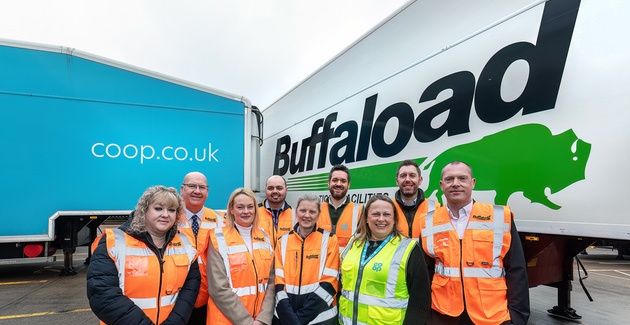
An important industrial gas, which is generated by fuel produced to power Co-op's logistics network, is being transformed into a new commercial opportunity, creating revenue while helping its suppliers tackle CO2 shortages caused by global disruption.
And at the centre of the story sits a procurement team stepping into new territory...
Buffaload Logistics transports chilled and ambient food and beverage products from Co-op’s UK national distribution centre to the retailer’s 11 regional distribution hubs across the country. A shared commitment to sustainability is at the heart of the partnership between one of the world’s largest co-operative groups and its logistics partner that now extends to over a decade. A partnership moving into its next era with a new co-innovation.
Buffaload runs a fleet of LNG (Liquefied Natural Gas) vehicles to reduce its carbon emissions – a fleet fuelled by bio-LNG made from agricultural and food waste. A by-product called biogenic CO2 is produced, captured and stored when the carbon dioxide is released from the decomposing waste. Commonly known as ‘green CO2’, because all the input is from natural, biological processes, the quality controlled product is in high demand, partly as a result of global disruption to CO2 supply chains.
Recognising the value of this domestically produced CO2, Co-op is now working with Buffaload to leverage its supplier network and give priority access of the green CO2 to the food and beverage supply chain in its supply chain, where it is used in packaging, fizzy drinks and cooling systems. The co-innovation has created a new revenue stream while supporting sustainability and circular economy goals, too.
Innovation starts with a mindset shift
Co-op’s procurement function now sits within the commercial function rather than the more traditional finance reporting line – a shift in line with global trends, as found in this year’s CIPS Global State of Procurement & Supply report. This facilitates the team’s ability to not only focus on cost reduction, but gives space for Co-op procurement to create value, drive innovation and generate revenue.
Co-op's chief procurement officer Imran Rasul stepped into a new role of chief commercial officer for both GFR (Goods for Resale) and GNFR (Goods not for Resale), as part of this new structure. He believes this was the first step to unlocking the function’s ability to create new value.
“This is about more than reporting lines. It’s also engineered a mindset shift, and created the framework for our procurement team to go and be a profit centre. We’ve been able to build the structures to enable procurement to act on commercial opportunities and put the skills that brilliant procurement professionals already have into action,” explains Rasul.
Sustainability isn’t optional, it’s essential
With this shift comes new expectations and innovation from its existing supply chain provided Co-op’s procurement team with the fuel to meet this goal. The opportunities to co-innovate and turn the by-product of an existing process into a commercial operation – one with sustainability and circularity at its heart – became rapidly apparent to both organisations. Buffaload exists as the contracted supplier, while Co-op activates its existing supplier relationships to open doors and offer green CO2 back into the supply chain.
Co-op’s procurement team were excited and ready to act on this opportunity and generate shared revenue.
“These were conversations we were already having with our suppliers,” explains Co-op’s Grant Lowe, head of the logistics category and strategic supplier management. “We’re regularly talking with them about supply chain resilience and sustainability, and now, thanks to one of our strategic suppliers, we’re able to offer a solution back into the value chain – a solution that also works for the planet.”
“At Co-op, sustainability is one of our clear, long term priorities” adds Lowe. “Buffaload shares our values and we’ve regularly collaborated with them during our partnership to decarbonise our logistics operations – including backing the adoption of a new fleet of larger vehicles to enable fewer journeys. We trust them, and they trust us.”
Fundamental procurement skills come to the fore
The Buffaload story isn’t the only example where procurement is stepping out of its “comfort zone”. Through Co-op Power, the team offers energy buying, account management and consultancy services to support companies with their energy procurement, while its procurement-as-a-service model helps its smaller, subsidiary businesses leverage existing procurement capabilities.
With new targets to generate revenue, the procurement team at Co-op is stepping into new territory. But there was real confidence amongst leadership that the existing team were ready for new opportunities to shine and build on their fundamental procurement skills.
Take supplier relationship management as an example. Whether it’s at the annual supplier conference, or through initiatives like its CIPS award winning Endless Inclusion Hub, the procurement team invest time and energy in engaging their supplier base and building strong partnerships.
This work doesn’t go unnoticed by suppliers. “We chose to work with Co-op because they’ve always looked beyond the traditional customer-supplier relationship. Their procurement team understands that real value comes from collaboration, shared ambition and long-term investment,” says Buffaload Logistics CEO John Kerrigan.
“Together, we’ve been able to tackle challenges that go far beyond logistics, from large-scale decarbonisation to creating new opportunities for suppliers through initiatives like biogenic CO2. Co-op gave us the confidence to invest, innovate and think differently, which is exactly what procurement as a service should enable.”
And while expectations on revenue generation may be new, Rasul says team members have quickly adapted and realised the same commercial skills they use in negotiations apply the other way.
“We’re continually committed to development and training, but that’s only been a small part. This is about unlocking the entrepreneurial skills that already exist in our procurement function. Already we’re seeing the team spotting new opportunities,” explains Rasul.
“Procurement can be positively challenging in the sales environment. We know the questions that procurement teams will ask, what they look for, and speak their language – we’re just seeing it from both sides now.”
The next stage of procurement
As procurement evolves to meet more complex challenges amidst global volatility, organisations may look more than ever to innovation that already exists within the supply chain. Co-op continues to embrace this reality, deepening its partnerships and finding new ways to show procurement’s value.
Throughout 2026, CIPS is leading The Great Conversation – a worldwide dialogue about the future of the profession. It’s clear from the community’s response that expectations of procurement and supply professionals are changing. Forward-thinking organisations no longer view the function as a cost-centre, but rather a strategic value creator. One that unlocks innovation from increasingly disrupted supply chains, steers organisations through uncertainty, and can spot new commercial opportunities.
Conversations with trailblazers like leadership guru Mike Soutar, ex-CPO and CIPS chair Alison Barto and supply chain leader Nick Nanos echo this change. And in one of the world’s largest consumer co-operatives, Co-op, this evolving role of the procurement and supply function has become a reality.
Related articles
How Co-op's inclusion programme sparked new supply chain conversations
Find out how Co-op's Endless Inclusion Hub transformed supplier relationships and fostered meaningful dialogue around diversity and inclusion.
Future lessons - from the history of procurement
What wisdom can we extract if we look at the history of procurement, and how does this apply to the future of the profession? CIPS chief futurist, Dr Graham Norris, offers a perspective as part of The Great Conversation.
Top three ways companies can manage a procurement and supply crisis
Supply chain and risk consultant Nick Wildgoose offers three pieces of advice here that all, in some way, relate to having deep knowledge of your supply chain across multiple tiers.